Compassion fatigue does not arrive with fanfare. It creeps in on the heels of a double shift, a code that did not go as planned, or the third patient of the day whose story sounds distressingly like your own. Most clinicians recognize burnout as exhaustion and cynicism tied to workload. Compassion fatigue is different. It is the emotional callus that forms from repeated exposure to trauma, grief, and moral adversity. It dulls empathy, narrows patience, and quietly erodes judgment.

I have sat with surgeons who once prided themselves on steadiness, now rattled by small errors. I have worked with nurses who hold a patient’s hand through hospice at 11 p.m., then wipe down a crash cart and walk into the next room as if nothing happened. Residents who cannot remember the last meal eaten while seated. The culture that valorizes grit can mask wounds until a moment of collapse. Trauma therapy is not simply for patients; it is a clinical safety intervention for the people who care for them.
What compassion fatigue looks like in a hospital hallway
There is no single presentation. I think of a PICU nurse who cried only when walking from the parking garage to the front door, never inside the building. Or the hospitalist who suddenly avoided complex discharges because they required more conversations with distressed families. The seasoned paramedic who kept his gear bag packed at home because being perpetually on alert felt safer than feeling anything. These are not failures of character. They are predictable responses to cumulative stress, vicarious trauma, and moral distress.
Burnout often improves with rest, staffing fixes, and workflow redesign. Compassion fatigue may not. The symptoms sit closer to trauma. Nightmares. Intrusive imagery. Numbing. Irritability that seems wildly out of proportion to what is happening in the moment. A shrinking capacity to take in other people’s suffering without flinching. Many clinicians describe a mismatch between the importance of a case and their internal reaction to it, like watching themselves on delayed broadcast.
How trauma accumulates in medicine
Trauma in healthcare is rarely a single catastrophic event. It is the stack of moments. The pediatric code that echoes your child’s age. The suicidality screening that lands in your inbox two hours after a memorial for a colleague. The obsolete policy that forces a family through an avoidable maze. It is also the quiet moves that you make to get through a day, such as skipping lunch because grief makes eating feel complicated, and then normalizing that pattern for years.
Moral injury, a phrase that has moved from combat psychology into clinical settings, shows up when your values collide with what the system asks you to do. Eight discharges before noon when two families need an hour each. A prior authorization fight that delays chemotherapy. These are the moments clinicians recount in therapy with more pain than the messy resuscitation. Moral injury and vicarious trauma do not resolve with a single weekend off. They respond to targeted treatment, skilled reflection, and organizational accountability.
Early signals worth heeding
The body telegraphs this problem. Do not wait until it shouts. Here is a compact checklist I use with medical teams when we talk about prevention. If two or more of these have persisted for several weeks, it is time to act.
- You feel blank, irritated, or detached when hearing patient stories that used to move you. You avoid certain cases or tasks because of an image, sound, or smell that sticks. Your sleep is fragmented by work dreams, early waking, or startling at ordinary noises. People at home tell you that you are sharper, quieter, or “not really here” after shifts. Micro errors or documentation delays crop up in ways that surprise you.
What trauma therapy offers clinicians
Trauma therapy is not a confessional booth. It is a structured, evidence-based process for reorganizing how the nervous system stores and responds to overwhelming experiences. A good trauma therapist will take into account your schedule, your exposure profile, and the practical constraints of call, float, and weekend coverage. The aim is not to desensitize you to suffering, but to restore choice. You want the freedom to feel compassion when it helps and to set it aside when the task requires crisp execution.
Different methods suit different clinicians. Some people prefer a clear protocol. Others need a slower, relationship-based approach. Many benefit from combining both.
EMDR therapy for the people who run toward emergencies
EMDR therapy engages the brain’s innate capacity to reprocess disturbing memories. It uses bilateral stimulation, often through rapid eye movements, tapping, or alternating tones, to help integrate overwhelm that has been stuck in sensory fragments. For medical professionals, EMDR can target both discrete events and the hum of cumulative exposure.
The protocol often begins with resourcing. You and your therapist build internal anchors, like a mental image of a place where your body relaxes on cue, and install them with bilateral stimulation. You also identify somatic signals that mean you are nearing the edge of your window of tolerance, then practice returning within range. From there, you select targets. A failed intubation that keeps replaying. A child’s voice in a specific room of the ED. The helplessness you felt when a patient died alone because visitor restrictions were still in place. Reprocessing sessions typically last 60 to 90 minutes, and many clinicians prefer early morning or telehealth blocks before shift work.
What tends to surprise medical professionals is the efficiency. A single compact target can shift in one to three sessions. Complex, layered experiences take longer. The metric is not perfection. It is what changes when the memory is recalled. If your heart rate no longer spikes and your mind no longer collapses into the worst moment, you regain control over attention and behavior on the job.
I have worked with an OB whose hands shook whenever she heard a fetal heart tone dip, years after a shoulder dystocia ended badly. After several sessions focused on that case and two other near misses, the physical cues eased. She still acted quickly at decelerations, but the panic overlay lifted. That difference prevents both overcorrection and indecision.
Classic trauma therapy, paced for clinical life
Not every story belongs in EMDR. Some clinicians prefer or require phased, relational trauma therapy. Phase one emphasizes stabilization. You and your therapist map your exposure, identify predictable triggers in your unit or specialty, and practice immediate skills. Phase two involves processing losses and moral injuries, often in spoken form with careful pacing. Phase three consolidates meaning and reengages values. This work can live inside cognitive behavioral therapy, sensorimotor psychotherapy, or psychodynamic frameworks, adapted to your bandwidth.
Timing matters. Many clinicians do well with biweekly sessions at first, then taper. Shorter, more frequent sessions help in weeks when you move through high-acuity blocks. Therapists used to medical environments will coordinate around your reality, not ask you to bend life around therapy.
Couples therapy protects the home front
Compassion fatigue strains relationships. Partners absorb the overflow. They see the rigid routines that once functioned as survival skills morph into distance. Couples therapy can be preventive maintenance rather than the court of last resort. In sessions with clinicians and their partners, I have seen small agreements transform evenings. A 20 minute decompression buffer after walking in the door, with no household asks and no talk about work unless invited. A one-sentence heads-up text that says, “Rough shift, need quiet,” which helps the family set tone without guessing. Clear rules on whether charting happens at home.
Couples work also creates a shared language. If you both can name moral injury and vicarious trauma, the conversation shifts from blame to teamwork. You get better at catching early signals and at planning recovery time after heavy rotations. This is not indulgence. It is risk reduction for the relationship and for clinical performance.
When the clinician is also a parent: bringing child therapy into the picture
Parents in healthcare meet a particular kind of collision. A child’s fever spikes and suddenly you are not a doctor or nurse, you are a parent staring at a number. Overlap between pediatric cases and your child’s age can trigger intrusive thoughts. Child therapy can help your family, not just your patients. Play therapy and parent-child sessions teach co-regulation skills. Parents learn to translate medicalized vigilance into age-appropriate safety. One pediatrician I worked with began a bedtime ritual with her six-year-old that included a short grounding exercise and a story about the “helpers” at the hospital. Her own nervous system settled as she co-regulated with her child.
If your child has absorbed your stress, a few sessions with a child therapist can reset the household tone. Children read nervous systems more than words. When the clinician parent learns to downshift at home, kids settle faster and behavior improves, which removes an additional stress load from the clinician.
Neurodivergent therapy acknowledges different nervous systems
Many clinicians are neurodivergent and have built successful careers by using focus, pattern recognition, or decisive problem solving. The same traits can amplify vulnerability to compassion fatigue if the system demands constant context switching or sensory overload. Neurodivergent therapy respects how your brain processes input and helps tailor coping accordingly. That might look like noise management solutions on a unit where alarms never stop, explicit plans for transitions between tasks, and direct scripts for advocating with supervisors without masking to the point of depletion. EMDR can be adapted by adjusting pacing, stimulation modality, and session structure. So can other trauma therapies.
Therapists fluent in neurodivergent therapy avoid forcing social camouflaging or generic time management hacks that backfire. They help you build care plans that match your cognitive profile. The outcome is not to change who you are, but to prevent an environment-skill mismatch from turning into chronic overload.
Team-based buffers that change the math
No individual skill can compensate for a system that ignores trauma load. Departments that take compassion fatigue seriously bake in structures that metabolize stress in real time. Balint groups invite clinicians to present a case not for medical advice, but for reflection on the clinician-patient relationship. In well-run groups, you do not get interrupted with fixes. You get time to notice what a case stirred up in you and why. Many internal medicine and psychiatry departments have used Balint for decades. Surgical teams are beginning to revive the format in shorter, case-focused blocks.
Schwartz Rounds offer a hospital-wide forum to discuss the emotional aspects of care. They are not group therapy. They are storytelling with guardrails. The benefit is visibility. When a respiratory therapist hears a radiology tech articulate the same strain, silos soften. I have seen attendance rise after a single session on moral distress during resource shortages. Those conversations legitimize the emotional labor of hospital work.
Peer support programs function as psychological first aid after adverse events. A well-trained peer can do a 20 minute follow-up within 72 hours, normalize reactions, and point to resources. That brief contact, especially if matched by specialty or role, cuts the isolation that often drives people to stew or ruminate.
After a code or adverse event: what to do this week
Early, light touch matters. Do not mandate a group debrief where everyone has to recount details if they do not want to. Evidence over the past two decades suggests that forced single-session debriefings can entrench trauma for some people. Offer choice. Provide information about common acute stress reactions and how they usually settle across one to two weeks. Make it easy to schedule a one-on-one with a peer supporter or therapist. Leaders should quietly adjust scheduling for the primary team when possible. A half-day reduction on the next shift can buffer risk. Document the plan so it becomes routine, not a favor.
If you were directly involved, pay attention to sensory flashbacks. Loudspeakers, smells from cleaning agents, the tone of the monitor you heard during the event. These cues are programmable. A few EMDR sessions or targeted exposure with a therapist can unlink the stimulus from the panic response. Waiting and hoping the triggers fade on their own can work, but if they persist beyond a month or interfere with patient care, intervene.
Practical daily skills that hold under pressure
Clinicians need micro skills that fit inside three minutes, not thirty. Box breathing, 4 seconds in, 4 hold, 4 out, 4 hold, can throttle down a surging sympathetic response between rooms. Orienting is more potent than it sounds: let your eyes track the corners of a room, find four colors, feel the soles of your feet, then return to the task. Before entering a tough conversation with a family, press your thumb and forefinger together while thinking of a specific competent moment from your training. Pair that gesture with the memory enough times and it becomes a rapid anchor. Schedule a protected sip-and-stand break at predictable times. Even 90 seconds every hour changes heart rate variability across a shift.
Documentation can be a hidden source of re-exposure. If a note dredges images you do not need to relive, say what happened with accurate, neutral language. Cluster upsetting charting when you have five steady minutes, rather than letting it leak into the end of the day and hitch a ride home. Build a simple leaving-the-unit ritual, such as washing hands while mentally naming three competent things you did today. This sort of closure cue does not solve the system, but it signals your nervous system that work is done.
Leadership’s role: adjust the levers you control
Compassion fatigue worsens when clinicians lack agency and feedback loops. Leaders cannot fix national staffing shortages in a week, but they can make targeted changes that reduce trauma exposure without cutting quality.
Track not just RVUs or patient counts, but exposure intensity. Two cases with violent trauma and a pediatric death in one shift is not the same as a sequence of stable follow-ups. Build a simple acuity score into daily huddles and share load accordingly. Rotate particularly heavy assignments, like assault cases or pregnancy losses, with planned buffers afterward. Protect debrief time after high-exposure events even if it is brief. Make protected mental health appointments administratively easy. If your system requires PTO for therapy, reconsider. Many organizations have created a bucket of medical-professional wellness hours, 4 to 12 per year, which clinicians can use for trauma therapy or EMDR therapy without stigma.
Normalize that couples therapy can be a professional resilience tool, not a private failing. Incorporate training for supervisors on how to spot compassion fatigue without pathologizing. Be specific in the ask: “I noticed three charting delays and you seemed unusually quiet on rounds. How are you sleeping? What would help this week?” Then follow through.
What gets in the way of getting help
Time and distrust. Clinicians often tell me they cannot add another appointment to an already crammed schedule. That is real. It is also solvable. Many therapists who work with medical staff offer early morning, late evening, or telehealth slots. Short term therapy focused on a narrow target can fit into a month, not a year.
Distrust comes from bad experiences. People worry a therapist will not understand the realities of trauma in medicine, or will aim to soften them in ways that make them less effective at work. When you interview therapists, ask direct questions. Have you treated medical professionals before? Are you familiar with EMDR or other trauma therapies? How do you coordinate with rotating schedules? Can we focus on work-related targets first? Good clinicians welcome these questions.
Stigma lingers. Some fear that seeking trauma therapy will land in their record or threaten credentials. Know your institution’s policies. Many EAPs provide short term, confidential counseling, but may not be ideal for targeted trauma work. Private-pay or out-of-network arrangements limit documentation flow through your employer. If you plan to use insurance, ask how records are handled. You are entitled to clarity.
How to start an EMDR-informed care plan without drowning in logistics
If EMDR or another trauma therapy makes sense, you can build a feasible plan in a single sitting. The steps below keep it practical.
- Identify one to three specific targets that interfere with work or home. Write one sentence for each, with date or context anchors. Book a consult with an EMDR-trained therapist and bring your schedule. Ask for a time-bound plan, for example 6 to 10 sessions, with resourcing first, then reprocessing. Choose a resourcing exercise you can practice daily for two minutes. Pair it with an existing routine like scrubbing in or handwashing before leaving the unit. Coordinate with one ally at work, a charge nurse or chief resident, who can help protect a session time during a heavy week. Set a re-evaluation date with your therapist to measure changes in sleep, startle, and work avoidance. Adjust targets based on that data.
Finding a therapist who understands medicine
Look for someone with trauma training, yes, but also with an ear for clinical reality. Credentials to notice include EMDRIA certification for EMDR therapy, board certification in clinical psychology, or robust continuing education in trauma modalities. Past work in hospital settings helps. When you reach out, name your role and the types of cases you see. You are vetting for fit as much as technique.
Some clinicians prefer a therapist outside their health system to reduce concerns about dual relationships. Telehealth widens options, especially across state lines if licensure permits. If you are on a tight timeline, ask about intensive formats, half-day or full-day EMDR blocks, which compress care while keeping the nervous system regulated between sessions. These are not for everyone, but for discrete targets they can be efficient.
Measuring progress in ways that matter to clinicians
You live in a data world. Use it. Track three to five metrics for six weeks: sleep duration, number of intrusive images per day, avoidance behaviors at work, documentation delays, and a subjective 0 to 10 compassion capacity rating at the end of each shift. Do not obsess over daily noise. Watch the trend. If intrusive images drop from 10 per day to 2, and your compassion capacity inches from 3 to 6 on average, the therapy is working. If not, raise it with your https://www.fuzzysockstherapy.com/adult-children-dysfunctional-families therapist and adjust. Sometimes the target is wrong. Sometimes moral injury calls for a different intervention, such as values-based work, systems advocacy, or institutional change.
When compassion fatigue masks deeper depression or PTSD
Screening helps. If you persistently feel worthless, lose interest in everything including parts of medicine you once loved, or think about escape in ways that scare you, widen the lens. Depression can travel with compassion fatigue. PTSD can too. A formal assessment does not brand you. It gives you a map. If you endorse active suicidal thoughts, tell someone now. Call a crisis line, page the on-call counselor if your system has one, or go to an ED. You know what you would tell a patient. Apply it to yourself.

Medication can support therapy, especially when sleep is fractured. Many clinicians resist pharmacology because they want to prove toughness. Toughness is sleeping enough to practice safely. Short term use of evidence-based medications can stabilize the ground so therapy can do its job.
The long arc back to steady
Recovery is not a switch. It feels more like getting your range of motion back. You notice there is a moment between a patient’s news and your reaction again. You can choose empathy without drowning in it. The hallway smells less like the worst day you had there. You start to hear colleagues again when they ask if you are free for a coffee, and you say yes without calculation.
Most clinicians I have treated do not end up leaving medicine. Some change roles, specialties, or schedules. Many stay and feel more grounded than they were even before the strain. They learn limits that honor both their patients and themselves. They set up protections that do not rely on heroics. Trauma therapy, including EMDR therapy, becomes a skilled practice, like a procedure you can call up when needed. Couples therapy shores up the bridge between work and home. Child therapy and neurodivergent therapy extend the net so that your family and your wiring are not fighting the job every day.
Compassion fatigue is not a verdict. It is data about exposure, support, and meaning. When you treat it with the same precision you bring to patient care, you give yourself back the one thing the system cannot assign you: the freedom to care on purpose, with edges that hold.
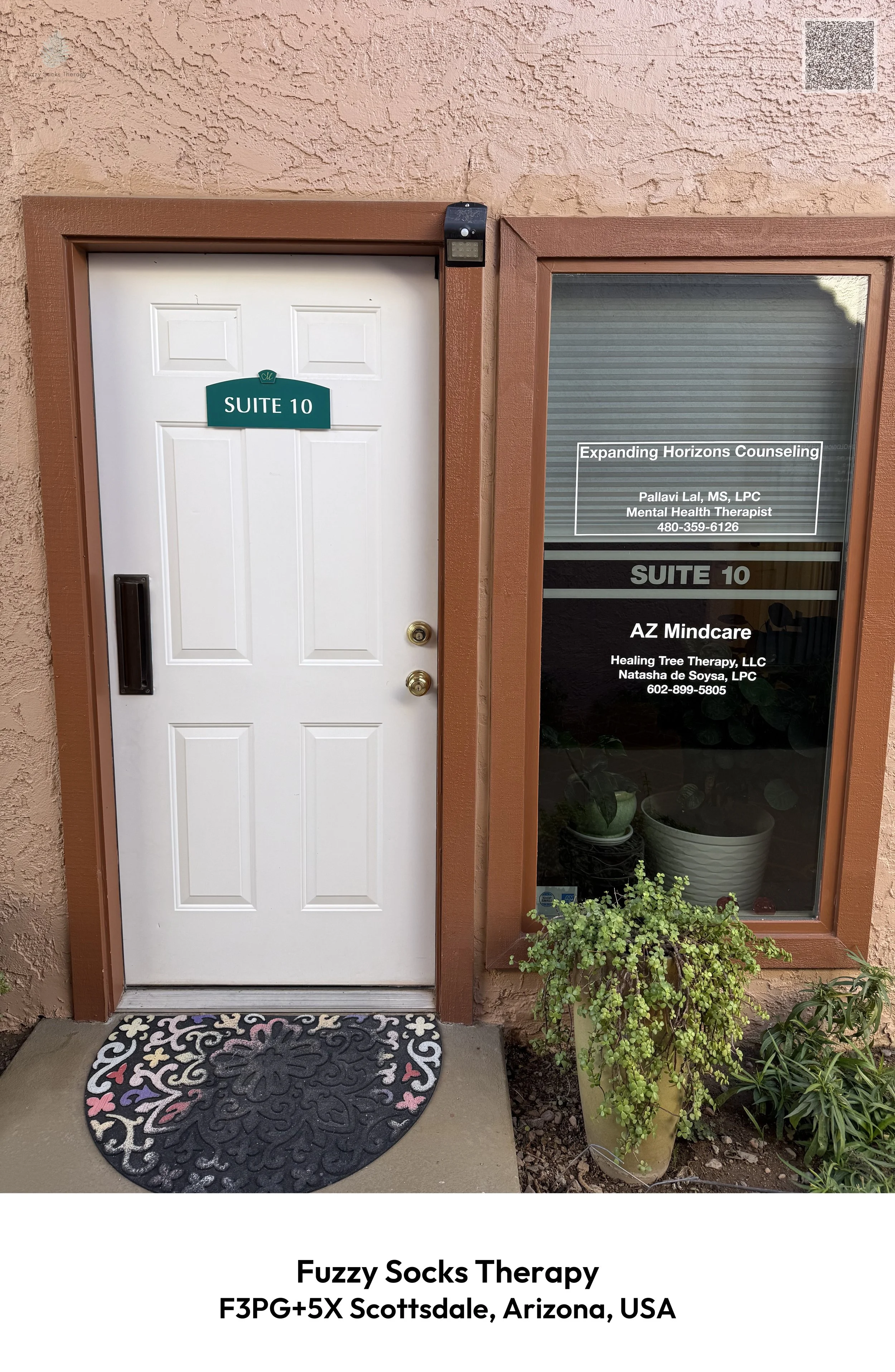
Address: 3295 N. Drinkwater Blvd., Suite 10, Scottsdale, AZ 85251
Phone: (720) 378-8454
Website: https://www.fuzzysockstherapy.com/
Email: [email protected]
Hours:
Monday: 9:00 AM - 5:00 PM
Tuesday: 9:00 AM - 5:00 PM
Wednesday: 9:00 AM - 5:00 PM
Thursday: 9:00 AM - 5:00 PM
Friday: 9:00 AM - 5:00 PM
Saturday: Closed
Sunday: Closed
Open-location code (plus code): F3PG+5X Scottsdale, Arizona, USA
Map/listing URL: https://maps.app.goo.gl/cqhwvXU4UMg6QL1YA
Embed iframe:
The practice offers in-person therapy in Scottsdale along with online sessions for clients in Arizona, Colorado, and Florida.
Clients can explore services such as trauma therapy, EMDR therapy, Deep Brain Reorienting Therapy, neurodivergent therapy, child therapy, couples therapy, discernment counseling, and parenting intensives.
Fuzzy Socks Therapy is especially relevant for people navigating trauma, dysfunctional family dynamics, ADHD, autism, relationship conflict, and emotional overwhelm.
The website presents a direct, practical therapy style focused on real tools and meaningful change rather than vague advice.
Scottsdale clients looking for trauma-informed psychotherapy can find support that combines deeper healing work with concrete skill building.
The practice also offers help for adult children of dysfunctional families, couples on the brink, and neurodivergent kids, teens, and adults.
To get started, call (720) 378-8454 or visit https://www.fuzzysockstherapy.com/ to book a free consultation.
A public Google Maps listing is also available for Scottsdale location reference alongside the official website.
Popular Questions About Fuzzy Socks Therapy
What does Fuzzy Socks Therapy help with?
Fuzzy Socks Therapy helps with trauma, dysfunctional family patterns, neurodivergence, relationship conflict, emotional overwhelm, and related challenges for individuals, couples, and families.
Is Fuzzy Socks Therapy located in Scottsdale, AZ?
Yes. The official website lists the office at 3295 N. Drinkwater Blvd., Suite 10, Scottsdale, AZ 85251.
Does Fuzzy Socks Therapy offer in-person and online sessions?
Yes. The official site says the practice offers in-person therapy in Scottsdale and online therapy in Arizona, Colorado, and Florida.
What therapy approaches are listed on the website?
The website highlights EMDR therapy, Deep Brain Reorienting Therapy, discernment counseling, play therapy, Dialectical Behavior Therapy, Emotionally Focused Therapy, and practical trauma-informed skill building.
Who provides therapy at Fuzzy Socks Therapy?
The official website identifies the therapist as Lianna Purjes.
Does the practice offer couples counseling?
Yes. The website includes couples therapy, couples intensives, and discernment counseling for couples deciding whether to stay together or separate.
Does the practice work with children and adolescents?
Yes. The site says the practice offers child therapy and support for children, adolescents, and their families.
How can I contact Fuzzy Socks Therapy?
Phone: (720) 378-8454
Email: [email protected]
Website: https://www.fuzzysockstherapy.com/
Landmarks Near Scottsdale, AZ
Drinkwater Boulevard is the clearest local reference point for this office and helps nearby clients place the practice in Scottsdale. Visit https://www.fuzzysockstherapy.com/ for service details.
Old Town Scottsdale is a familiar city landmark and a practical reference for people searching for therapy near central Scottsdale. Call (720) 378-8454 to learn more.
Scottsdale Civic Center is another recognizable local landmark that helps define the surrounding area for nearby professional services. The official website has current contact details.
Scottsdale Stadium is a well-known destination in the city and a useful point of reference for local users. Fuzzy Socks Therapy offers both in-person and online sessions.
Indian School Road is a major corridor that helps many residents orient themselves in Scottsdale. More information is available at https://www.fuzzysockstherapy.com/.
Fashion Square and the surrounding central Scottsdale area are widely recognized by local residents and visitors alike. Reach out through the website to book a free consultation.
Downtown Scottsdale is a strong local search reference for people seeking counseling and psychotherapy services in the area. The practice serves Scottsdale in person and multiple states online.
Scottsdale Road is another major route that helps define the broader service area for clients traveling from nearby neighborhoods. The practice supports individuals, couples, and families.
The Scottsdale arts and civic district is a useful area reference for those familiar with the city center. Visit the site to review specialties and next steps.
Central Scottsdale commuter corridors make this practice relevant for nearby residents who want in-person therapy, while online sessions add flexibility for clients in Arizona, Colorado, and Florida.