Trauma does not happen in a vacuum. It lands in a body shaped by family stories, migration, faith, gender roles, language, and the unwritten rules of a community. When we ignore this context, even the most evidence based treatment can feel clumsy. When we honor it, clients often find traction faster, report fewer ruptures, and build skills that hold outside of therapy.
I have sat with clients who could name their symptoms with clinical accuracy yet felt unseen, and with others who disliked labels but could map their healing through prayer, music, or cooking alongside aunties. The work is not about picking one lane. It is about weaving trauma therapy, EMDR therapy, couples therapy, child therapy, and neurodivergent therapy with the threads that already matter to the client.
What culture means in a therapy room
Culture touches behavior, yes, but more crucially it shapes meaning. Two people can survive the same event and form very different narratives about it. A car accident for a 22 year old immigrant student may confirm a belief that the world is unsafe and bureaucracies are unforgiving. The same accident for a middle aged parent might reinforce a story about responsibility and vigilance. When we listen for meaning, we avoid pathologizing culture and instead make room for nuance.
In practice, this means slowing down to ask what practices are soothing in the client’s world, which roles feel negotiable, and which are nonnegotiable. Some clients need language that honors collective identity, like our family or our people, while others need a strong sense of I. In many Black, Indigenous, and immigrant communities, pain is both personal and communal. Individual coping strategies matter, but they are often enacted within a web of obligations and resources. Therapy that ignores that web can pull clients further from their support systems.
Safety is not one size fits all
We talk about safety as a foundation, yet what signals safety varies. Some clients feel safer when the therapist self discloses a little about identity or values. Others rely on formality and clear boundaries. I have worked with Muslim clients who felt more relaxed when I oriented our chairs to avoid facing a window to the street, not because of superstition but because privacy at prayer and in therapy holds sacred energy. A queer teen once told me that the first sign of safety was seeing a small rainbow sticker on my bookshelf. For a veteran from a rural background, it was the practical question, Where should you sit to feel like you can see the exits?
Pay attention to rhythm as well. In some cultures, pauses carry respect. In others, overlapping talk signals engagement. Misreading these rhythms can make a therapist look cold or intrusive. It is better to ask, How do you know when someone is really listening to you, than to assume your version of eye contact and head nodding translates.
Assessment with cultural humility
Standardized measures have value, but they are built on norms that may not fit everyone. A screening tool might mark a person’s somatic complaints as depression, while in their community bodily language is the first and often safest way to name distress. I still use measures like the PCL, PHQ, or GAD, then I pair them with open questions. What does a good day feel like in your body. When did your appetite change. How do people in your family talk about rest or struggle.
In first sessions, ask about healers and helpers outside of therapy. Has the person talked with clergy, elders, traditional practitioners, or coaches. A client’s involvement with curanderismo, sweat lodges, or acupuncture can either complement or conflict with a treatment plan. Dismissing a beloved practice backfires. Integrating it, or at least respecting it, often strengthens the alliance.
EMDR therapy, adapted for culture and context
EMDR therapy is powerful, yet its structure can feel foreign. The language of negative cognition, body sensation, and bilateral stimulation may land awkwardly if we move too quickly or choose examples that do not resonate.
A few practical adjustments help:
- Phrase cognitions in culturally familiar terms. Instead of I am powerless, some clients resonate with I cannot move this alone or I have to carry more than one person should. Invite culturally meaningful images for resourcing. A grandmother’s kitchen at dawn, the call to prayer, ocean waves on the beach where a family gathered every summer, or the sound of a drum circle can all serve as anchors. Offer options for bilateral stimulation beyond eye movements. Hand taps under a shawl for privacy, seated foot taps to music, or holding a stone in one hand and a prayer bead in the other can keep the process grounded without feeling clinical. Use interpreters carefully. In EMDR, brevity matters. Before starting, I meet with the interpreter to agree on consistent phrasing and a cadence that respects processing without over elaboration.
Cultural narratives also shape memory networks. For a client exposed to racism, a single event may link to a lifetime of microaggressions. Targeting one “big T” without naming the steady hum of “small t” traumas leaves too much untouched. With clients from collectivist backgrounds, an image of a sibling’s face or a parent’s sacrifice may carry as much emotional charge as the event itself. When clients hold political trauma, like war or state violence, we often need to distinguish between personal responsibility and systemic harm, a move that can soften shame and free the nervous system to process.
One more note on pace. In some communities, emotional exposure to past pain is viewed with caution. If trust in institutions is low, diving into Phase 4 can feel like a trap. Spending extra time in Phases 2 and 3, building regulation, spiritual resources, and relational supports, is not avoidance. It is cultural attunement.
Couples therapy where love meets loyalty to culture
Couples therapy shines when it illuminates competing loyalties. Many conflicts are not just about dishes or money. They are about how a family back home handled tasks, what love language was taught without words, and what each partner believes a good son or daughter still owes their parents. I have worked with a couple where one partner felt stingy because they sent only 10 percent of income to family abroad, while the other felt anxious because any remittance disrupted a fragile budget. The argument softened once we named the values on the table: duty and stability, pride and fear of scarcity.
Gender roles add texture. Some clients want to preserve distinct roles, others do not, and most couples fall somewhere in between. Therapy makes space for explicit agreements. In one session, a husband from a culture where public displays of affection are rare admitted he wanted to hold his wife’s hand in private but felt embarrassed in public. They negotiated a private ritual before guests arrived, which met her need for intimacy without violating his social comfort.
Couples who are queer or trans often bring a second layer of cultural navigation. Acceptance within the family of origin may change one holiday at a time. Extended family expectations about children, names, and ceremonies can carry intense grief or joy. A culturally responsive approach treats these shifts not as symptoms but as milestones that deserve care.
For immigrant couples, language can split partners into roles, the more fluent one becomes the translator at doctor visits and schools. Resentment can grow. I encourage shared language plans, for example, one night a week where they try a TV show in the less used language with subtitles, or a rule that both attend the parent teacher conference even if one speaks less. Small changes rebalance power in the relationship.
Child therapy with family and school in view
Children do not choose their cultural context, they live it. In child therapy, culture shows up in play themes, friendship rules, and even in what counts as a tantrum versus spirited behavior. A child from a home where elders are rarely contradicted may appear compliant in session yet act out at school. Another child may seem defiant at home but test limits in therapy because it feels safer. The task is to decode behavior within both worlds.
Caregiver involvement is nonnegotiable, but the form varies. In some families, a grandparent is the day to day parent. Clarify who carries decision making power. When a child is bilingual or learning a heritage language, therapy that only happens in English may miss shame or pride tied to language. I sometimes ask children to teach me a game or a word from home. The smile that follows is not trivial, it tells the nervous system, I matter here.
For trauma, I lean on play, storytelling, and gentle somatic work. In communities that mistrust mental health systems, it helps to frame therapy around skills the family values, like focus for school, stronger sleep, or brave actions. If the child has refugee trauma, we coordinate with school counselors to reduce triggers like fire drills. A simple accommodation, warning before a sudden alarm, can prevent a spiral.
When parents worry about stigma, I offer short, concrete summaries of progress and invite them to choose what they want documented. There is a trade off, comprehensive notes help continuity of care, while sensitive content might increase fear of records being seen. Naming that trade off invites collaboration.
Neurodivergent therapy that respects difference
Autistic and ADHD clients live with sensory, communication, and executive function differences that complicate trauma therapy. Many arrive masked, fluent in people pleasing, and exhausted. Trauma may stem from bullying, restraint in school, or the chronic stress of feeling out of sync. A culturally responsive approach treats neurodivergence as culture too, with its own language, values, and shared history.
Adjustments that change outcomes include concrete language, predictable structure, and permission to stim. I keep sessions visually simple, offer seating choices, and use written agendas. Rather than ask How does that make you feel, I might ask Where in your body is this, warm or cold, tight or loose. If interoception is tricky, we anchor to observable cues like breath rate or shoulder position.
For EMDR therapy with neurodivergent clients, I often shorten sets, widen the preparation phase, and let clients choose stimulation that supports regulation. Some prefer tactile buzzers set to a slow rhythm. Others do better with alternating foot taps to music. Visual tracking may be too intense. Literal thinkers may bristle at metaphors, so I check language gently. A client once stopped me and said, I do not have a safe place in my head. We built a safe routine instead, three steps they could enact at home in five minutes.
Masking makes shame sticky. Normalizing monotropism or time blindness shifts blame off character and onto fit. Executive function supports, like shared digital checklists for between session tasks, are part of therapy, not an extra.
Working with interpreters without losing the thread
Interpreters change the room. Done poorly, therapy becomes stilted and clients stop sharing. Done well, it becomes precise and humane. I brief interpreters before the first session. We agree on consistent translations for key terms, like flashback or grounding, and discuss brevity during EMDR sets. I address clients directly, not the interpreter, and pause often to confirm meaning. When a client’s dialect differs, I ask them to teach us their words. This small invitation shifts power.
There are moments when an interpreter’s identity matters. A survivor of intimate partner violence may not want a male interpreter. A client from a small community may prefer someone outside that network to protect privacy. Honor those preferences where possible, and be transparent about constraints.

Faith, spirituality, and traditional healing
For many clients, spiritual practice is central to coping. Prayer, meditation, scripture, and ceremony can sit comfortably alongside trauma therapy. I ask, What role does faith play in your healing, and Would you like us to include it in our plan. Integration might look like a brief prayer at the start of session, a psalm used as a grounding phrase, or scheduling around religious observances. For Indigenous clients, I have coordinated with cultural leaders to align therapy pacing with ceremony seasons, recognizing that some topics open only at certain times.
Be mindful of spiritual trauma as well. Clients hurt by religious leaders may still want the comfort of sacred music or ritual. Separate the practice from the person who misused it. That distinction can unlock grief and reclaim soothing.
Power, privilege, and therapist identity
Therapists bring bodies and histories too. Our race, gender, class, citizenship status, and neurotype affect the room. Pretending neutrality often communicates avoidance. A short, thoughtful acknowledgment of difference can clear space. I might say, You named that my being a white clinician could feel risky. I am committed to earning trust, and I welcome feedback if I miss something.
Self disclosure is not a trick, it is a tool. Share what helps the client, not your need for approval. If I speak a client’s first language poorly, I name that and invite correction. If I share a faith background, I disclose enough to normalize their practices without co opting them. The point is to reduce power imbalances, not erase them.
A compact checklist for culturally responsive practice
- Ask, do not assume. Replace guesses with specific questions about food, sleep, ritual, family roles, and help seeking. Translate goals into the client’s values. Tie therapy tasks to what matters at home and in community. Calibrate pace and exposure. Spend more time on safety and resources if institutions feel unsafe or stigma is high. Use flexible modalities. Adjust EMDR therapy, couples therapy, child therapy, and neurodivergent therapy elements to fit language, sensory needs, and family involvement. Share power. Offer choices about note content, session structure, and whether to involve interpreters or elders.
Measuring what matters
Outcome data can be culturally humble. I track symptom measures, then pair them with personalized markers. For example, a client might aim to attend their weekly community gathering three times this month, or to sleep through the night without checking locks more than once. In my practice, clients generally report early shifts by sessions 4 to 6, with deeper changes solidifying between 8 and 16 sessions. That range widens if the trauma is complex, if trust in systems is low, or if neurodivergent or chronic pain factors are present.
I also ask clients to choose a word or phrase that captures progress, like steadier, lighter in the chest, or not snapping at the kids. Those anchors are cheap and powerful. They show up in the body before they show up on a questionnaire.
Telehealth, access, and privacy
Telehealth expanded reach, but it has cultural and practical snags. Not all homes offer privacy. A survivor living with extended family may not want to process trauma in https://pastelink.net/l9slne66 the next room over. Solutions include audio only sessions with code words, car sessions parked safely, or scheduling when household noise is highest to mask sound. Digital platforms must handle interpreters cleanly, with breakout audio if needed. When bandwidth is low, I favor phone sessions with mailed or emailed visuals ahead of time.
Telehealth also bridges geography. I have worked with clients who join from their workplace break room or a parked truck during a delivery route. It is not elegant, but it fits their life. Flexibility reduces dropout, especially for caregivers and shift workers.
Common pitfalls and how to repair
Even with care, we will misstep. The issue is not perfection, it is repair. If you pronounce a name incorrectly, fix it on the spot and ask for the correct sound. If you misunderstand a family dynamic, circle back with humility. I once framed a client’s avoidance as anxiety, then learned it was observance of a mourning period. We reset, and I thanked them for educating me.
Beware of cultural tourism, the habit of asking clients to be your teacher. Curiosity is fine. Load bearing education should not sit on the client’s shoulders week after week. Use supervision, consultation, and quality readings to do your homework. If you integrate a cultural practice, check whether you are venturing into appropriation. When in doubt, anchor your role as facilitator of the client’s own wisdom, not provider of rituals that do not belong to you.
Two brief vignettes
A 35 year old mother, a refugee, came to therapy with nightmares and numbness. She distrusted institutions but wanted sleep back. We spent six sessions on safety and body regulation, using a breathing pattern she learned during prayer and a small scarf her daughter had given her as a tactile anchor. Only then did we begin EMDR therapy, targeting one crossing at a time. We avoided visual tracking, used gentle hand taps, and paused often. Nightmares eased by session 9. She declined a trauma narrative for her file, and I documented progress in functional terms per her request.
A 16 year old autistic student arrived after a meltdown at school led to suspension. He disliked eye contact, loved geology, and feared he was broken. We reframed behavior in terms of sensory overload and monotropism, set up a quiet corner at home, and built a school plan that reduced fluorescent light exposure. For trauma processing, we used slow bilateral foot taps to a playlist he curated, one song per target. Language stayed concrete. By month three, detentions dropped to zero. He joined a local rock club and found friends who did not demand small talk.
Building an inclusive practice beyond the room
- Hire and consult across differences. Bring in clinicians and supervisors with varied identities and modalities, including those trained in EMDR therapy and neurodivergent therapy. Pay interpreters fairly and train them for therapy contexts. Build a small pool to support continuity. Partner with community groups, clergy, and schools. Offer brief workshops that demystify trauma therapy without jargon. Audit your forms and space. Remove stigmatizing language, add pronoun and name fields, display materials in multiple languages, and include quiet lighting options. Invest in ongoing learning. Set a calendar for case consultations focused on culture and ethics, not just technique.
The work keeps changing, and that is the point
Culture moves. So must we. What made sense ten years ago about gender, neurodivergence, or family roles may feel dated now. Clients notice when we hold ideas lightly and listen with care. The heart of inclusive healing is not a checklist, it is a stance. Trauma therapy that holds identity, history, and community with respect becomes more than symptom reduction. It becomes a way clients can return to themselves without leaving their people behind.
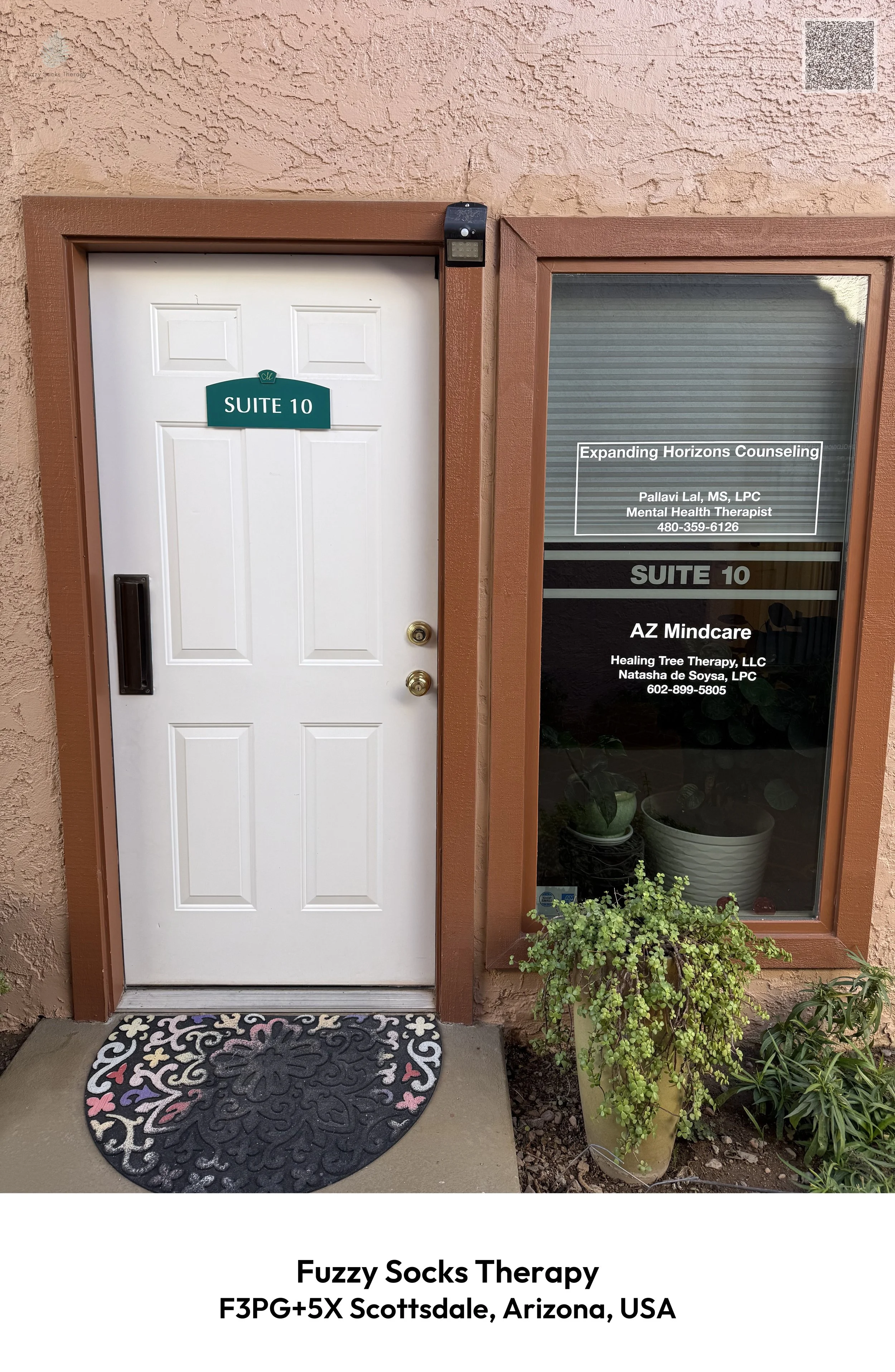
Address: 3295 N. Drinkwater Blvd., Suite 10, Scottsdale, AZ 85251
Phone: (720) 378-8454
Website: https://www.fuzzysockstherapy.com/
Email: [email protected]
Hours:
Monday: 9:00 AM - 5:00 PM
Tuesday: 9:00 AM - 5:00 PM
Wednesday: 9:00 AM - 5:00 PM
Thursday: 9:00 AM - 5:00 PM
Friday: 9:00 AM - 5:00 PM
Saturday: Closed
Sunday: Closed
Open-location code (plus code): F3PG+5X Scottsdale, Arizona, USA
Map/listing URL: https://maps.app.goo.gl/cqhwvXU4UMg6QL1YA
Embed iframe:
The practice offers in-person therapy in Scottsdale along with online sessions for clients in Arizona, Colorado, and Florida.
Clients can explore services such as trauma therapy, EMDR therapy, Deep Brain Reorienting Therapy, neurodivergent therapy, child therapy, couples therapy, discernment counseling, and parenting intensives.
Fuzzy Socks Therapy is especially relevant for people navigating trauma, dysfunctional family dynamics, ADHD, autism, relationship conflict, and emotional overwhelm.
The website presents a direct, practical therapy style focused on real tools and meaningful change rather than vague advice.
Scottsdale clients looking for trauma-informed psychotherapy can find support that combines deeper healing work with concrete skill building.
The practice also offers help for adult children of dysfunctional families, couples on the brink, and neurodivergent kids, teens, and adults.
To get started, call (720) 378-8454 or visit https://www.fuzzysockstherapy.com/ to book a free consultation.
A public Google Maps listing is also available for Scottsdale location reference alongside the official website.
Popular Questions About Fuzzy Socks Therapy
What does Fuzzy Socks Therapy help with?
Fuzzy Socks Therapy helps with trauma, dysfunctional family patterns, neurodivergence, relationship conflict, emotional overwhelm, and related challenges for individuals, couples, and families.
Is Fuzzy Socks Therapy located in Scottsdale, AZ?
Yes. The official website lists the office at 3295 N. Drinkwater Blvd., Suite 10, Scottsdale, AZ 85251.
Does Fuzzy Socks Therapy offer in-person and online sessions?
Yes. The official site says the practice offers in-person therapy in Scottsdale and online therapy in Arizona, Colorado, and Florida.
What therapy approaches are listed on the website?
The website highlights EMDR therapy, Deep Brain Reorienting Therapy, discernment counseling, play therapy, Dialectical Behavior Therapy, Emotionally Focused Therapy, and practical trauma-informed skill building.
Who provides therapy at Fuzzy Socks Therapy?
The official website identifies the therapist as Lianna Purjes.
Does the practice offer couples counseling?
Yes. The website includes couples therapy, couples intensives, and discernment counseling for couples deciding whether to stay together or separate.
Does the practice work with children and adolescents?
Yes. The site says the practice offers child therapy and support for children, adolescents, and their families.
How can I contact Fuzzy Socks Therapy?
Phone: (720) 378-8454
Email: [email protected]
Website: https://www.fuzzysockstherapy.com/
Landmarks Near Scottsdale, AZ
Drinkwater Boulevard is the clearest local reference point for this office and helps nearby clients place the practice in Scottsdale. Visit https://www.fuzzysockstherapy.com/ for service details.
Old Town Scottsdale is a familiar city landmark and a practical reference for people searching for therapy near central Scottsdale. Call (720) 378-8454 to learn more.
Scottsdale Civic Center is another recognizable local landmark that helps define the surrounding area for nearby professional services. The official website has current contact details.
Scottsdale Stadium is a well-known destination in the city and a useful point of reference for local users. Fuzzy Socks Therapy offers both in-person and online sessions.
Indian School Road is a major corridor that helps many residents orient themselves in Scottsdale. More information is available at https://www.fuzzysockstherapy.com/.
Fashion Square and the surrounding central Scottsdale area are widely recognized by local residents and visitors alike. Reach out through the website to book a free consultation.
Downtown Scottsdale is a strong local search reference for people seeking counseling and psychotherapy services in the area. The practice serves Scottsdale in person and multiple states online.
Scottsdale Road is another major route that helps define the broader service area for clients traveling from nearby neighborhoods. The practice supports individuals, couples, and families.
The Scottsdale arts and civic district is a useful area reference for those familiar with the city center. Visit the site to review specialties and next steps.
Central Scottsdale commuter corridors make this practice relevant for nearby residents who want in-person therapy, while online sessions add flexibility for clients in Arizona, Colorado, and Florida.